 Science On a Sphere
Drought Data Indicators

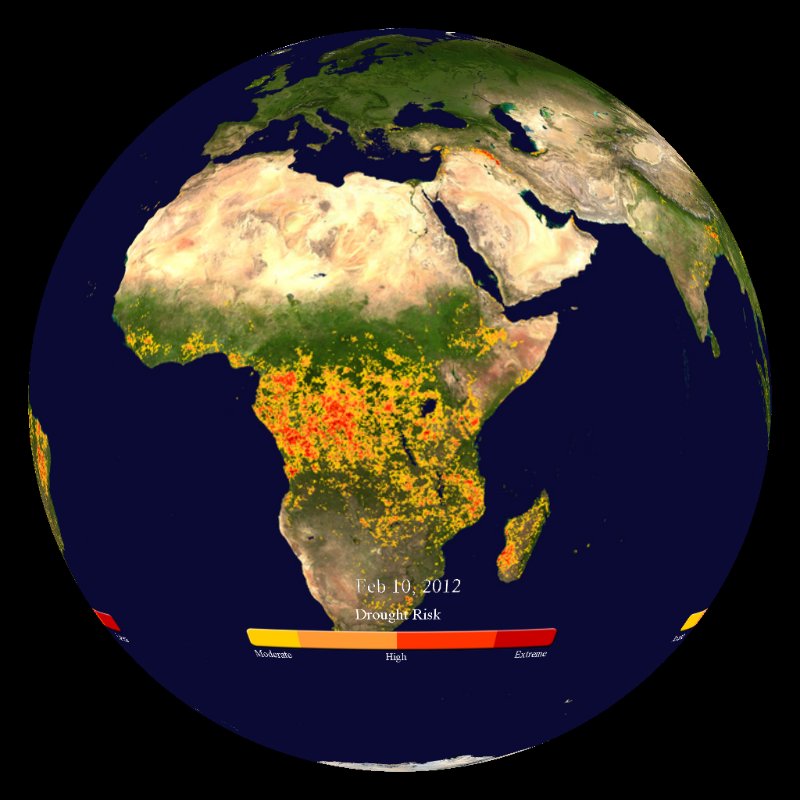
In this lesson, students will begin by observing a 1935 illustration of a drought scene and a global drought risk dataset. Following this, they will compare satellite data with information from the U.S. Drought Monitor, which integrates local climate and agricultural data.
What’s happening in this map? What do you notice that makes you think that?
In this short activity, students will strengthen their critical thinking skills by carefully observing the data, forming ideas, and backing them up with evidence.
While these maps connect to lessons on drought, climate, weather, and natural and human impact hazards, the primary focus is on slowing down, looking closely, asking great questions, and building stronger evidence-based ideas.
If you are teaching any of these topics, this activity could be a valuable addition to your unit.
Date and Grade Relevance
Permalink to Date and Grade Relevance- Week 14 - Published July 29, 2026
- Best suited for 8-12+ grades
- NGSS - MS-ESS3, HS-ESS3- Earth and Human Activity
Teacher Resources
Permalink to Teacher Resources- Teacher Guide
- Electronically-fillable Student Worksheet
- Drought Data Descriptions Reading
- Presentation Slides