 Science On a Sphere
Aurora
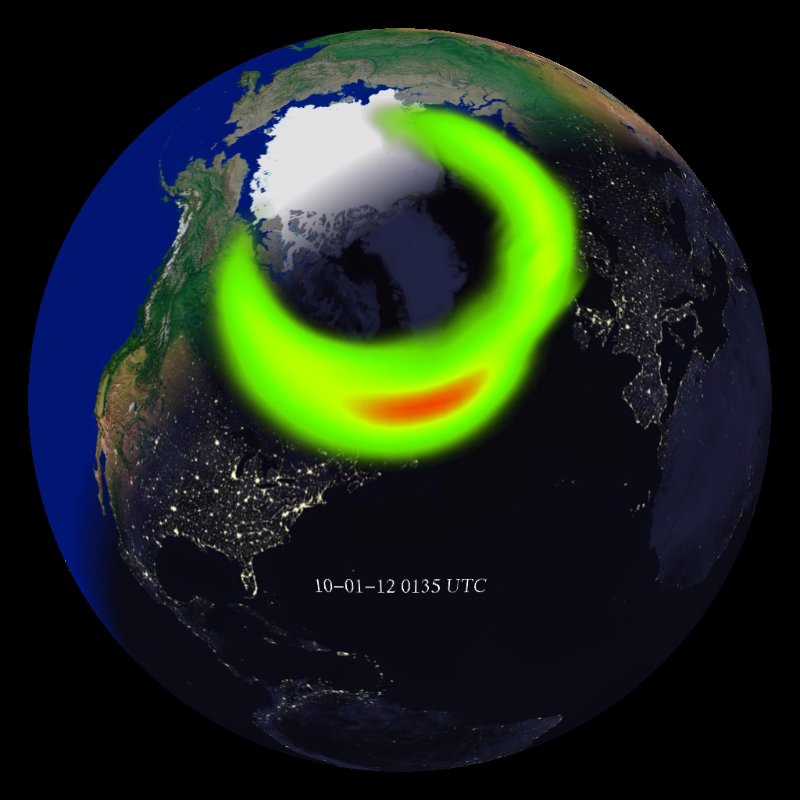
This auroral ovation model shows how the particles from the sun interact with our upper atmosphere.

Seeing the aurora borealis is more than just a memorable experience—it's witnessing a spectacular, otherworldly light show. But what celestial mechanics are behind this brilliant phenomenon? What forces create the shimmering curtains of light we call the Northern Lights? Use this Data Lens mini-lesson, along with the extension reading and short video, to provide your students with an exciting introduction to the space physics that power the aurora.
What’s happening in this map? What do you notice that makes you think that?
In this short activity, students will strengthen their critical thinking skills by carefully observing the data, forming ideas, and backing them up with evidence.
While the main goal is to encourage slow, careful observation, this activity also connects to topics like physics, electromagnetic spectrum, techonology, and operational scientific monitoring.
This auroral ovation model shows how the particles from the sun interact with our upper atmosphere.